Decoding Contribution Rates: How Different Slot Categories Feed into Blackjack Playthrough Requirements at Regulated Sites
Written by Morgan Lehmann · Sep 24, 2026

Decoding Contribution Rates: How Different Slot Categories Feed into Blackjack Playthrough Requirements at Regulated Sites
Contribution Mechanics in Bonus Structures
Contribution rates determine how much wagers on specific games count toward fulfilling playthrough requirements, and operators at regulated sites apply these percentages differently across slot categories while players seek to unlock blackjack access. Classic three-reel slots typically register at full 100 percent contribution in many licensed environments, whereas video slots with five reels or more often maintain the same rate yet progressive jackpot titles sometimes receive reduced weighting because their prize pools introduce additional variables into the calculation. Data from the Nevada Gaming Control Board shows these distinctions help platforms manage risk exposure across game types without altering the core requirement that players must meet total wagering thresholds before certain table games become available.
Slot Categories and Their Typical Weightings
Regulated operators segment slots into groups that include classic reels, video formats, megaways mechanics, and progressive options, each carrying its own contribution multiplier toward the overall playthrough target. Experts have observed that megaways titles frequently align with 100 percent contribution in jurisdictions such as those overseen by the Alcohol and Gaming Commission of Ontario, while certain branded progressives may drop to 50 percent or lower depending on the bonus terms published at the time of offer. Those who review operator schedules note that these adjustments appear consistently across markets because they balance player engagement with the higher volatility profiles of advanced slot formats. Players often discover that meeting a 30x playthrough on a deposit bonus requires substantially more spins when progressives contribute less, prompting many to select classic or standard video slots first to accelerate progress before shifting to blackjack.
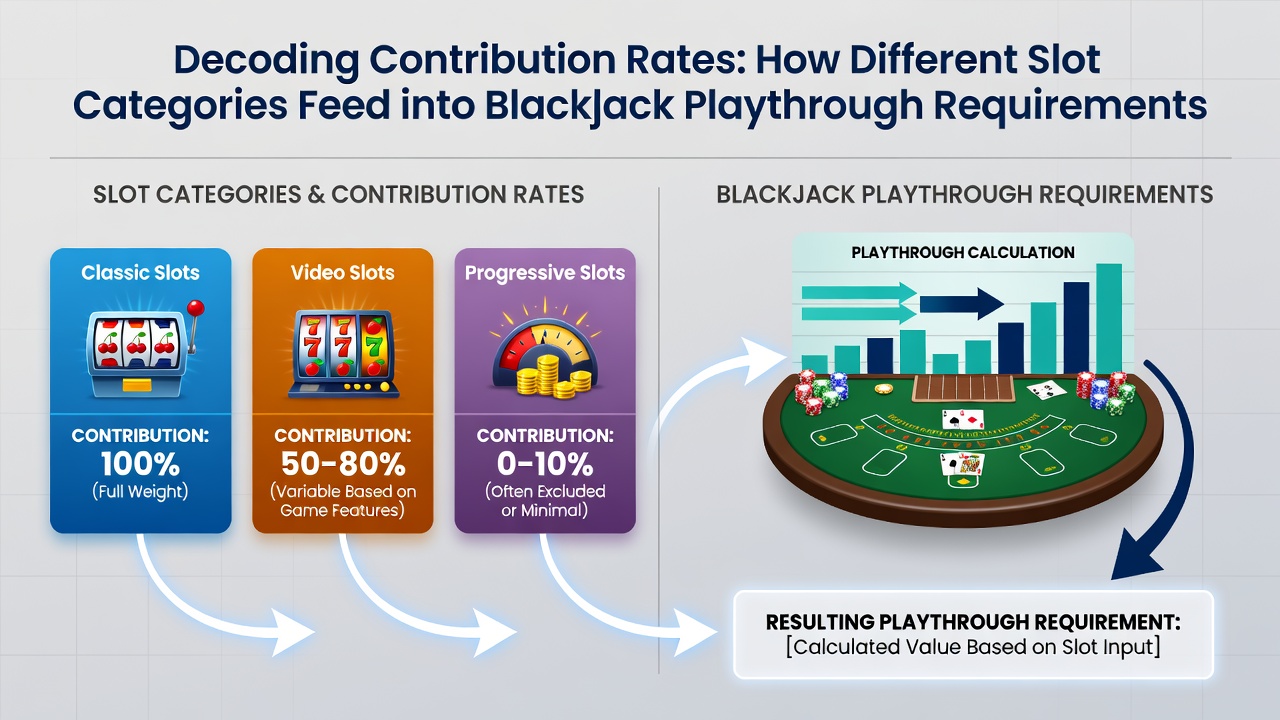
September 2026 has brought updated reporting cycles in several North American and European markets, and figures reveal that contribution tables remain stable even as new slot releases enter the catalog. Observers note that sites must publish these rates clearly under licensing rules, which allows players to calculate expected spin volume needed to clear requirements. One study released through academic gaming research channels highlighted that transparent contribution structures correlate with higher retention rates among users who move between slots and blackjack, since individuals can plan their sessions around known percentages rather than guessing.
Blackjack Playthrough Integration
Once slots have generated enough qualifying wagers, the remaining playthrough balance applies to blackjack at the reduced contribution rate that most operators assign to table games, often 10 percent or 20 percent. This staged approach means early slot play feeds directly into the total required before blackjack tables open for bonus funds, and the precise sequencing appears in the terms and conditions of each licensed platform. Researchers discovered that players who prioritize high-contribution slot categories early reduce the overall number of hands needed once they reach the blackjack phase, although the lower table-game weighting still extends session length. According to reports compiled by the New Jersey Division of Gaming Enforcement, clear disclosure of these tiered rates helps prevent disputes and supports responsible gambling measures across the regulated sector.
Industry associations have documented that contribution frameworks also vary by bonus type, with welcome packages sometimes weighting slots differently from reload offers or cashback promotions. Those who track multiple sites find that cross-referencing contribution tables before depositing allows more accurate bankroll projections, especially when the goal includes extended blackjack play. The reality is that regulated environments enforce these rules uniformly within each jurisdiction, yet the exact percentages can shift between operators as long as they remain within approved guidelines.
Practical Examples Across Jurisdictions
Take one case where a player receives a bonus tied to a 40x wagering requirement on slots; selecting only 100-percent contribution titles means the full stake counts each spin, whereas mixing in lower-weighted progressives stretches the required volume. Data indicates that platforms in Canadian provinces publish these examples in player education materials, and similar patterns appear in Australian regulatory summaries. What's interesting is how the same slot category can receive different weighting depending on whether the bonus originated from a slot-specific promotion or a general deposit offer, forcing players to verify the source before committing funds.
Another instance involves loyalty programs that grant bonus rounds usable on blackjack only after a slot-driven playthrough completes. Observers note that September 2026 updates in several markets reinforced the need for real-time contribution trackers within player dashboards, allowing users to monitor progress across categories without manual calculation. This transparency reduces friction when participants transition from reel play to card tables, and it aligns with broader efforts to standardize information across regulated sites.
Conclusion
Contribution rates serve as the bridge between slot activity and blackjack eligibility at regulated sites, and understanding how different categories feed into playthrough calculations enables more informed session planning. Licensed operators maintain published tables that reflect jurisdictional standards, while players apply those figures to select appropriate games during the wagering phase. Continued reporting from oversight bodies ensures these mechanics remain consistent and accessible, supporting the structured movement between slot categories and table games across evolving regulatory landscapes.